

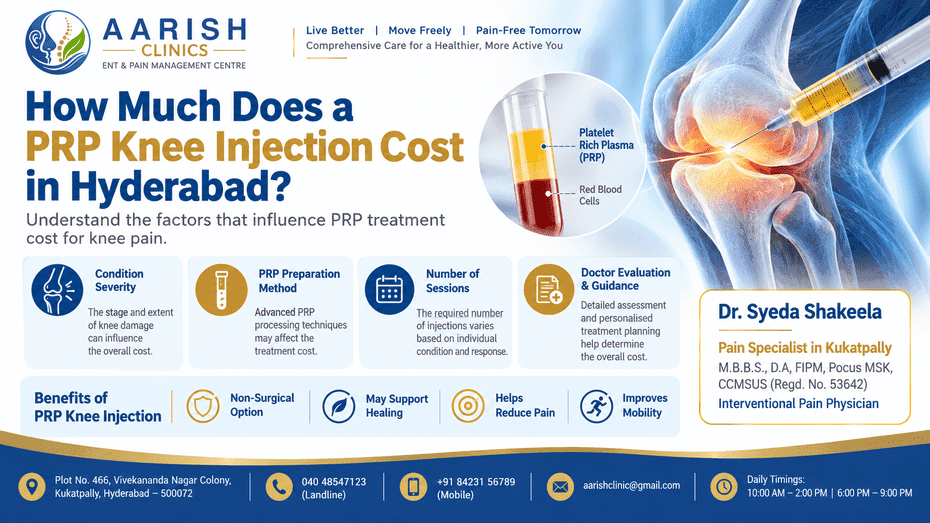
What Is Platelet-Rich Plasma (PRP) & How Is It Prepared?
Platelet-Rich Plasma (PRP) is an autologous biological therapy derived from a small sample of the patient's own peripheral blood. Human blood is composed of red blood cells, white blood cells, plasma, and platelets. Platelets are best known for their role in blood clotting, but they are also dense reservoirs of bio-active growth factors—including Platelet-Derived Growth Factor (PDGF), Transforming Growth Factor-beta (TGF-β), and Vascular Endothelial Growth Factor (VEGF).
To prepare PRP, approximately 15 to 30 milliliters of blood is drawn from the patient's arm in the clinic. The sample is placed in a specialized centrifuge machine that spins at high speeds. Through controlled centrifugation (either single-spin or double-spin systems), red blood cells are separated and discarded, isolating a concentrated plasma fraction containing 3 to 7 times the normal baseline concentration of platelets. This concentrated liquid is then carefully injected into the targeted intra-articular knee joint space.
What Factors Affect PRP Knee Injection Cost in Hyderabad?
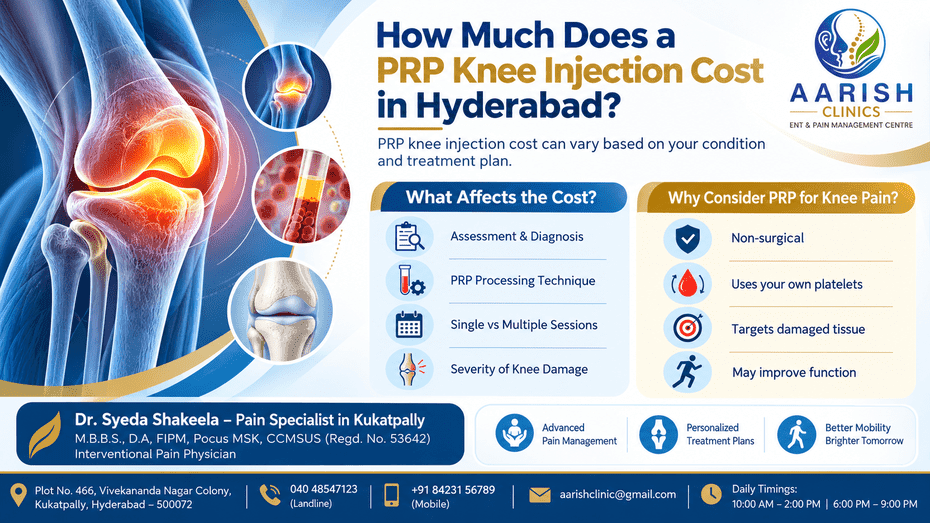
When researching provider prices in Hyderabad, patients often observe substantial cost differences between different medical facilities. Several technical, clinical, and logistical variables influence the cost per session:
1. PRP Preparation Kit & Centrifugation Technology
Basic open-tube systems have lower material costs but may yield inconsistent platelet concentrations. Advanced closed-system medical kits (such as double-spin buffy coat systems or leukocyte-poor PRP kits) reduce contamination risks and deliver standardized, highly concentrated platelets, which increases consumable expenses.
2. High-Resolution Ultrasound Guidance vs Blind Injections
Blind (palpation-guided) injections carry higher risk of missing the narrow joint space or injecting into periarticular fat pads. Performing the procedure under real-time musculoskeletal ultrasound (MSK USG) guidance ensures accurate placement of platelets directly into the synovial joint cavity, which requires specialized imaging equipment and sonography expertise.
3. Doctor's Specialization & Clinical Setting
Procedures performed by fellowship-trained interventional pain physicians or senior musculoskeletal specialists in sterile procedure suites reflect higher clinical expertise and dedicated patient safety standards compared to general clinics.
4. Unilateral vs Bilateral Knee Injections
Injecting both knees (bilateral) requires double the volume of blood processing and additional consumables. While bilateral sessions cost more overall, many clinics offer bundled rates that are lower than two separate single-knee procedures.
5. Package Pricing & Bundled Services
Some provider quotations include pre-procedure consultation, diagnostic ultrasound screening, local anesthetics, and post-injection follow-up appointments, whereas other clinics quote only the consumable injection cost and charge consultations separately.
Indicative Cost Overview: Hyderabad Market Estimates
Published Hyderabad provider estimates currently span roughly ₹6,000–₹30,000 per PRP knee injection session. Actual charges vary by clinic, PRP preparation method, doctor/procedure setting, imaging guidance, and what is included in the quotation.
Important Clarification on Clinic Pricing:
This is a general market estimate based on publicly available provider pricing and is NOT the official price at Aarish Clinics. Contact Aarish Clinics directly for its current consultation and procedure charges.
| Item | Indicative Information |
|---|---|
| Published Hyderabad PRP knee injection estimates | Roughly ₹6,000–₹30,000 per session |
| Number of sessions | Varies; no universal schedule (determined after clinical evaluation) |
| One or both knees | Confirm with provider when requesting quotation (bilateral packages vary) |
| Consultation / imaging / ultrasound guidance | May be charged separately depending on the medical center |
| Aarish Clinics price | Confirm directly with clinic |
Published provider prices are indicative and can change. They should not be treated as a standardized Hyderabad fee.
Who Is a Good Candidate for PRP Knee Injections?
PRP is not a universal solution for every knee complaint. Clinical evidence indicates that patient selection is the single most critical factor in achieving meaningful pain reduction and functional improvement:
Favorable Candidates for PRP:
- Mild to moderate knee osteoarthritis (Kellgren-Lawrence Grades 1, 2, or early 3).
- Active individuals or athletes with chronic patellar tendinitis or ligament sprains.
- Patients who failed basic physical therapy or cannot tolerate regular NSAID painkillers.
- Individuals seeking non-surgical options to maintain daily walking mobility.
Less Favorable / Non-Candidates:
- Severe, end-stage (Grade 4) bone-on-bone osteoarthritis with complete joint space collapse.
- Severe knee angular deformities (severe varus/valgus malalignment).
- Active joint infections, skin infections at the injection site, or systemic sepsis.
- Severe bleeding disorders or severe thrombocytopenia (very low platelet count).
How Is a PRP Knee Injection Performed?
At Aarish Clinics, PRP knee procedures are performed as safe, outpatient day-care procedures taking approximately 45 to 60 minutes from start to finish:
Blood Collection (Venipuncture)
A small volume of venous blood (15–30 ml) is drawn from your arm in sterile collection tubes containing an anticoagulant.
Centrifugation & Platelet Concentration
The sample is spun in a medical-grade centrifuge under strict sterile parameters to separate the platelet-rich buffy coat and plasma from heavy red blood cells.
Sterile Skin Preparation & Local Anesthesia
The knee area is thoroughly disinfected using antiseptic solutions, and a tiny amount of local anesthetic is placed in the superficial skin to ensure patient comfort.
Real-Time Ultrasound-Guided Injection
Using high-resolution musculoskeletal ultrasound, the physician visualizes the needle trajectory in real time, delivering the concentrated PRP precisely into the suprapatellar pouch or intra-articular joint space.
Brief Rest & Post-Care Instructions
After resting for 15 minutes, the patient is discharged with clear guidelines regarding temporary activity modification and cold compression.
Watch: PRP & Knee Pain Treatment Awareness
Watch this short educational video from Aarish Clinics for additional awareness about knee pain and treatment options.
Potential Benefits & Realistic Limitations of PRP
Some studies suggest PRP may improve pain or function in selected patients with symptomatic knee osteoarthritis, but results and protocols vary, and major guidelines describe limitations in the evidence.
What PRP May Offer:
- Modulation of intra-articular inflammation by counteracting catabolic cytokines like Interleukin-1 (IL-1).
- Symptomatic reduction in joint stiffness, aching, and pain during walking or stairs.
- Improvement in subjective quality-of-life and knee function scores in responders.
- Excellent biological safety profile since it uses the patient's own autologous blood cells.
Important Evidence-Based Realities:
- PRP has not been proven to reliably regenerate damaged knee cartilage or reverse advanced osteoarthritis.
- PRP does not cure osteoarthritis or replace the need for physical rehabilitation and weight management.
- PRP does not prevent knee replacement in patients with severe bone-on-bone degeneration.
- Treatment suitability should be determined after clinical evaluation and shared decision-making.
PRP vs Corticosteroid Injections: How Do They Compare?
Both therapies are commonly used for knee joint pain, but they work through fundamentally distinct physiological mechanisms:
Corticosteroid Injections
- Mechanism: Potent synthetic anti-inflammatory chemical agent.
- Speed of Onset: Very fast; relief often begins within 24 to 72 hours.
- Duration: Typically short-lived (2 to 6 weeks).
- Limitations: Frequent repeat injections carry potential risks of accelerating cartilage loss, systemic blood sugar spikes in diabetics, and bone density thinning.
Platelet-Rich Plasma (PRP)
- Mechanism: Autologous biological growth factors and anti-inflammatory cytokines.
- Speed of Onset: Gradual; relief builds over 3 to 6 weeks.
- Duration: Typically longer in responders (6 to 12 months).
- Limitations: Slower onset, initial mild post-injection inflammatory soreness, higher out-of-pocket cost, and variable individual response.
How Long Does Pain Relief Last & What to Expect?
Because PRP initiates a natural biological response rather than delivering a chemical pain blocker, improvement occurs gradually. In the first 2 to 5 days following an injection, patients may experience mild soreness, joint tightness, or a sensation of fullness. This is a normal part of the body's cellular signaling process.
Noticeable reduction in joint pain and stiffness generally emerges around week 3 or 4, with peak benefits observed between weeks 6 and 12. In patients who respond positively, symptomatic relief typically lasts between 6 and 12 months. However, the duration of benefit varies widely depending on joint loading, body weight, physical therapy compliance, and baseline osteoarthritis grade.
Potential Risks, Side Effects & Safety Profile
Because PRP is prepared exclusively from the patient's own blood, it has an inherently favorable safety profile with zero risk of allergic rejection or foreign-body reactions. Nonetheless, as with any needle procedure penetrating a joint cavity, potential risks exist:
- Temporary Pain Flare: Increased joint stiffness or aching for 24 to 48 hours post-procedure.
- Local Bruising: Mild bruising or skin discoloration at the blood draw or knee injection site.
- Infection (Extremely Rare): Joint sepsis is an exceedingly rare risk (< 1 in 50,000) minimized by strict sterile technique and single-use disposable kits.
- Non-Response: A minority of patients may experience minimal or no noticeable symptom reduction.
Alternative Non-Surgical Knee Treatments
PRP is one component of modern interventional pain care. At Aarish Clinics, patients are evaluated to determine whether other evidence-based non-surgical interventions may be suitable or complementary:
Viscosupplementation (Hyaluronic Acid Injections)
Delivers synthetic joint lubricating fluid to reduce friction and improve mechanical glide in dry, stiff osteoarthritic knees.
Genicular Nerve Radiofrequency Ablation (RFA)
A targeted minimally invasive procedure that uses gentle thermal energy to interrupt sensory pain signals from the knee, providing 6 to 18 months of relief for advanced arthritis patients who cannot undergo surgery.
Targeted Physical Therapy & Biomechanical Off-loading
Strengthening the quadriceps and hamstrings reduces compressive forces across the patellofemoral and tibiofemoral joints, providing durable functional support.
Is a PRP Knee Injection Worth the Cost?
Determining whether PRP is worth the out-of-pocket investment depends on weighing your symptom severity, lifestyle goals, arthritis grade, and response to previous conservative therapies:
For individuals with mild to moderate osteoarthritis who wish to remain active, walk comfortably without relying on daily painkillers, and explore joint preservation before considering surgical options, PRP can be a valuable non-surgical intervention.
Conversely, for patients with severe grade 4 bone-on-bone arthritis, extensive mechanical instability, or severe night pain, investing heavily in PRP offers limited benefit. In such cases, an ethical consultation will guide you toward realistic alternatives, including genicular nerve blocks or orthopedic surgical referral.
Is PRP Covered by Health Insurance in India?
In India, most standard retail health insurance policies do not routinely cover outpatient PRP knee injections, classifying them as biological or elective joint therapies. However:
- Certain comprehensive corporate group health plans with Outpatient Department (OPD) coverage may cover procedural costs or physician consultations.
- Daycare hospitalization policies occasionally cover interventional procedures if specific admission criteria and policy riders are met.
- Patients are advised to check directly with their Third-Party Administrator (TPA) or insurance provider prior to scheduling treatment.
PRP Knee Injection in Kukatpally at Aarish Clinics
At Aarish Clinics, non-surgical joint preservation and interventional procedures are directed by Dr. Syeda Shakeela, an experienced Interventional Pain Physician with over 14 years of clinical practice. Holding qualifications of M.B.B.S., D.A, FIPM, Pocus MSK, and CCMSUS (Regd. No. 53642), Dr. Shakeela specializes in musculoskeletal ultrasound, precision joint injections, and comprehensive pain rehabilitation.
As an established Pain Management Clinic in Kukatpally, Aarish Clinics provides dedicated ultrasound examination suites, standardized closed-system centrifugation, and structured post-injection recovery roadmaps. The clinic is centrally located at Plot No. 466, Vivekananda Nagar Colony, Kukatpally, easily accessible from KPHB Colony, Nizampet, Miyapur, Hitec City, and Bachupally.
Connect with our clinic online: Follow Aarish Clinics on Instagram for practical joint care guidelines, knee strengthening exercises, and clinic updates.
Frequently Asked Questions About PRP Knee Injections
Q1.How much does one PRP knee injection cost in Hyderabad?
Published Hyderabad provider estimates currently span roughly ₹6,000–₹30,000 per session. Actual charges vary by clinic, PRP preparation system, doctor qualification, ultrasound guidance, and whether follow-up or post-injection care is bundled. Patients should request an itemized quotation directly from their chosen clinic.
Q2.How many PRP injections are needed for knee pain?
There is no universally established PRP injection schedule for knee osteoarthritis. Clinical protocols vary; some physicians recommend a single injection, while others evaluate response after 2 to 3 sessions spaced 2 to 4 weeks apart. Treatment plans are customized after evaluating clinical knee joint examination and imaging.
Q3.Can PRP cure knee osteoarthritis?
No. PRP does not cure osteoarthritis and has not been proven to reliably regenerate lost joint cartilage or reverse established joint degeneration. Its clinical aim is to reduce intra-articular inflammation, modulate pain signaling cytokines, and improve joint mobility and daily function.
Q4.Is PRP better than a steroid injection for knee pain?
Corticosteroid injections typically provide rapid anti-inflammatory relief within days, but the benefit is usually short-lived (2 to 6 weeks), and frequent repeat injections carry risks of cartilage breakdown. In contrast, PRP has a slower onset of relief (3 to 6 weeks) but may provide longer-lasting symptom modulation without cartilage catabolism in selected mild to moderate cases.
Q5.Can PRP prevent knee replacement surgery?
PRP cannot guarantee that a patient will avoid total knee replacement, especially in severe, end-stage (grade 4) bone-on-bone osteoarthritis. In early to moderate stages, PRP may help manage pain and improve mobility as part of a comprehensive joint preservation program, which may help delay surgical interventions.
Q6.Is a PRP knee injection painful?
Most patients experience only mild discomfort during the procedure. A fine needle is used under local skin numbing, and real-time musculoskeletal ultrasound guidance ensures precise placement without touching sensitive bone periosteum. A temporary post-injection pain flare or fullness lasting 24 to 48 hours is common as the biological inflammatory cascade begins.
Q7.Is PRP knee treatment covered by health insurance?
In India, PRP knee injections are generally classified as outpatient regenerative or biological therapies and are not routinely covered under standard basic health insurance policies. Some comprehensive corporate or OPD plans may cover part of the procedure or consultation; patients should check directly with their Third-Party Administrator (TPA) or insurer.
Q8.Where can I ask about PRP knee injection treatment in Kukatpally?
You can consult Interventional Pain Physician Dr. Syeda Shakeela at Aarish Clinics, located at Plot No. 466, Vivekananda Nagar Colony, Kukatpally, Hyderabad – 500072. The clinic features dedicated musculoskeletal ultrasound suites for accurate joint evaluation and precision-guided injections.
Understand Your Non-Surgical Knee Care Options
Every knee is unique, and choosing the right therapy begins with an accurate anatomical examination and ultrasound scan. Consult Dr. Syeda Shakeela at Aarish Clinics in Kukatpally to discuss your knee pain and understand whether regenerative care is suitable for you.
The clinical and pricing information provided in this publication is for educational and informational purposes only and is not intended as a substitute for professional medical advice, diagnosis, or personalized pricing quotation. Published Hyderabad provider estimates span roughly ₹6,000–₹30,000 per session and are subject to change. They do not represent official pricing at Aarish Clinics. Always consult a qualified physician regarding any medical condition or treatment plan.
Selected Scientific References:
- Filardo G, et al. Platelet-rich plasma for knee osteoarthritis: A comprehensive review of clinical trials. Cartilage 2011;2(2):147-159.
- Meheux CJ, et al. Efficacy of intra-articular platelet-rich plasma injections in knee osteoarthritis: A systematic review. Arthroscopy 2016;32(3):495-505.
- Bennell KL, et al. Effect of intra-articular platelet-rich plasma vs placebo on pain and medial tibial cartilage volume in patients with knee osteoarthritis. JAMA 2021;326(20):2032-2040.