

Understanding PRP Injections for Knee Joint Osteoarthritis
Struggling with morning knee stiffness? Explore the scientific evidence, safety profile, and recovery guidelines of Platelet-Rich Plasma (PRP) joint preservation.
This guide is compiled for informational and educational purposes only. It is authored by Dr. Syeda Shakeela and does not establish a doctor-patient relationship. It should not be used as a substitute for individual professional clinical diagnosis or treatment. Always seek the advice of a qualified physician regarding any medical symptoms.
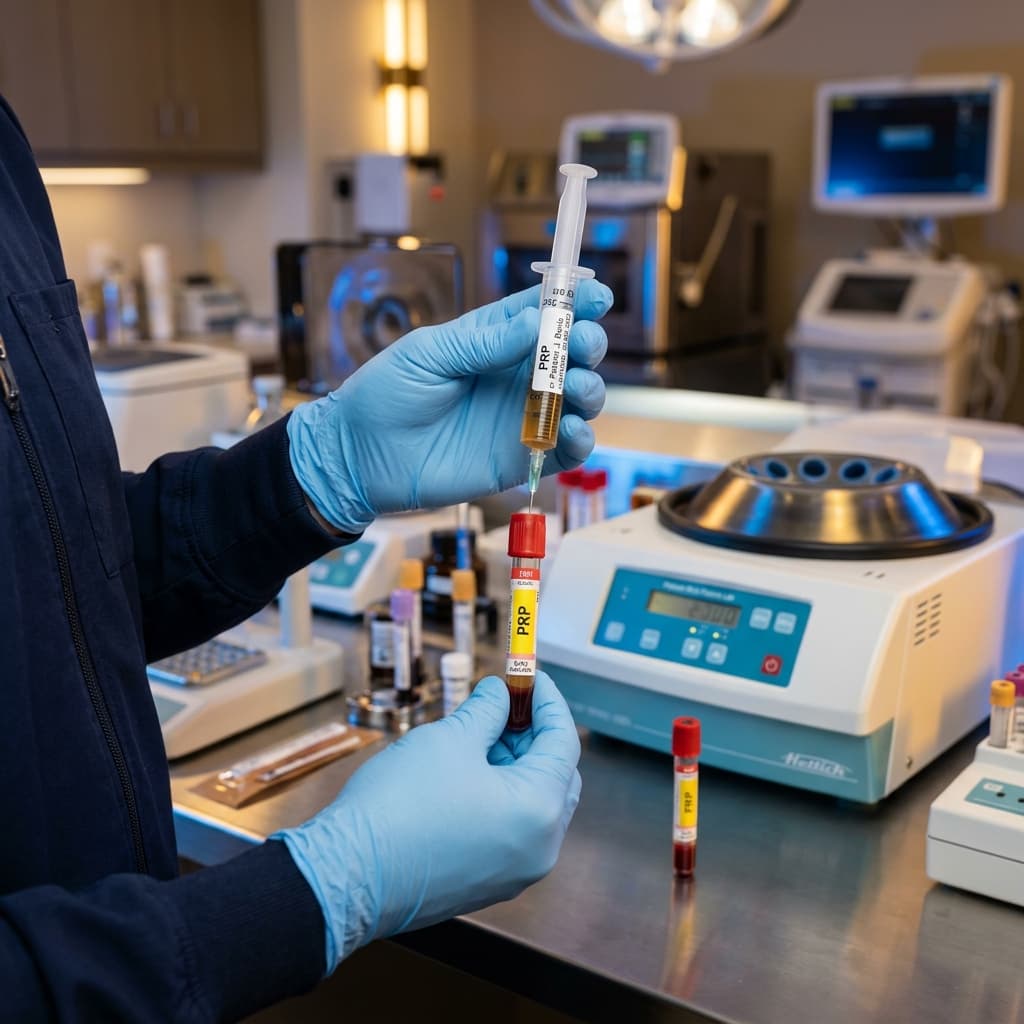
Knee osteoarthritis is a degenerative joint disease characterized by cartilage breakdown. Patients often present with morning stiffness, joint swelling, and walking issues. ### What is Platelet-Rich Plasma (PRP)? PRP is an autologous concentration of human platelets in a small volume of plasma. Platelets contain a high concentration of growth factors that support tissue healing. ### The Procedure 1. Blood Draw: A small amount of blood is drawn from the patient's arm. 2. Centrifugation: The blood is spun in a centrifuge machine to separate platelets. 3. Precision Injection: Under high-resolution ultrasound guidance, the PRP is injected directly into the target joint space. ### Safety & Efficacy Because PRP uses the patient's own biological cells, the risk of allergic reaction is extremely low. It is a medically safe, minimally-invasive outpatient procedure that helps restore joint environment and delay surgical joint replacement.
Discuss symptoms with Dr. Syeda Shakeela
Request a priority scheduling callback slot under our medical desk.