
Sleep Apnea Treatment in Kukatpally – Symptoms, Diagnosis and Treatment Options
Obstructive sleep apnea (OSA) is a prevalent sleep-related breathing disorder characterized by repetitive episodes of upper airway collapse during sleep. Learn about warning symptoms, formal diagnostic sleep testing, CPAP, oral appliances, and specialized upper-airway evaluation conducted at Aarish Clinics in Kukatpally, Hyderabad.
Quick Answer: When Should Sleep Apnea Be Evaluated?
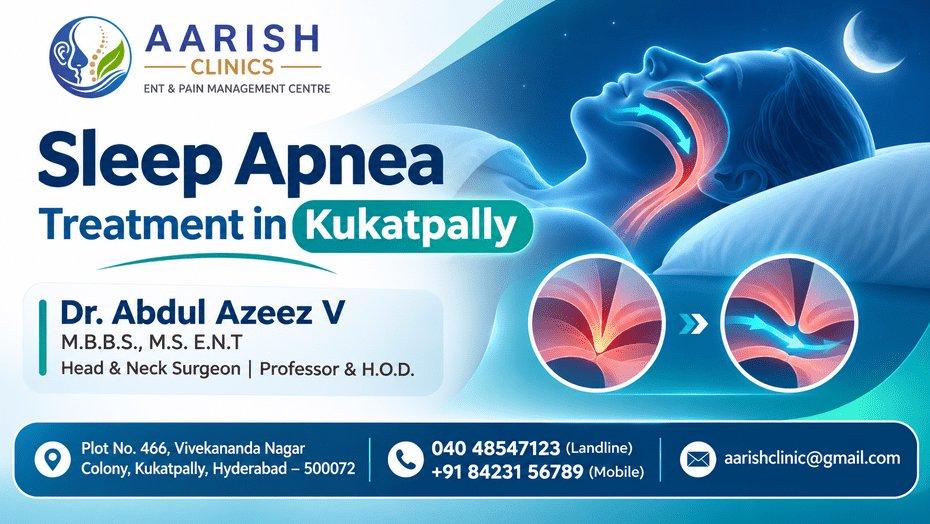
Loud habitual snoring, witnessed breathing pauses, gasping or choking during sleep, excessive daytime sleepiness, repeated nighttime awakenings or persistent unrefreshing sleep may require evaluation for obstructive sleep apnea. Diagnosis generally requires appropriate sleep testing rather than snoring symptoms alone.
What Is Sleep Apnea? Obstructive vs. Central
Sleep apnea is a serious sleep-related breathing disorder in which breathing repeatedly stops and starts throughout the night. These interruptions, known clinically as apneas (complete cessations of airflow lasting at least 10 seconds) and hypopneas (partial airway reductions with blood oxygen desaturation or arousals), disrupt the natural sleep architecture and deprive vital organs of adequate oxygen.
While people often speak of sleep apnea as a single entity, medical science recognizes two principal forms that differ fundamentally in their underlying pathophysiology:
Obstructive Sleep Apnea (OSA)
The most common form, accounting for over 85% of cases. OSA occurs when the throat muscles and soft tissues physically relax and collapse into the airway during sleep, obstructing airflow despite continued respiratory effort by the diaphragm and chest wall.
Central Sleep Apnea (CSA)
A less common neurological form where the airway remains open, but the brain's respiratory control centers in the brainstem fail to transmit regular breathing signals to the respiratory muscles. CSA is frequently associated with heart failure, stroke, or high-altitude exposure.
Some patients experience a combination of both forms, termed mixed or complex sleep apnea. At an ENT clinic, the primary focus is evaluating and managing the structural and mucosal components contributing to Obstructive Sleep Apnea.
Common Symptoms of Sleep Apnea
Because sleep apnea occurs during sleep, individuals are often unaware of their breathing interruptions. In many cases, it is a bed partner or family member who first notices alarming signs such as pauses in breathing or loud gasping. Symptoms span both nocturnal (nighttime) and diurnal (daytime) presentations:
Nighttime Symptoms
- Loud, persistent snoring: Frequently punctuated by sudden quiet pauses.
- Witnessed breathing pauses: Observed silent lapses lasting 10 to 30 seconds.
- Choking or gasping: Sudden awakenings accompanied by gasping for air.
- Restless sleep: Frequent tossing, turning, and nocturnal awakenings.
- Frequent nocturia: Waking multiple times during the night to urinate.
Daytime Symptoms
- Excessive Daytime Sleepiness (EDS): Overwhelming fatigue, dozing during work or reading.
- Dry mouth or sore throat: Waking with a parched throat due to heavy mouth breathing.
- Morning headaches: Dull forehead or tension headaches from overnight carbon dioxide retention.
- Cognitive changes: Memory lapses, brain fog, poor concentration, and irritability.
- Mood alterations: Unexplained mood swings, anxiety, or depressive symptoms.
What Causes Obstructive Sleep Apnea?
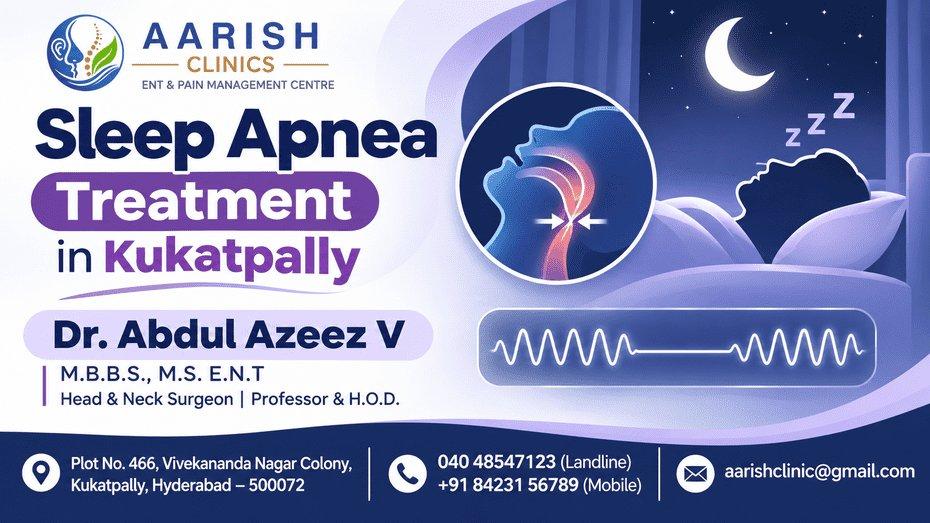
Obstructive sleep apnea is fundamentally caused by anatomical and neuromuscular collapse of the pharyngeal airway during sleep. When an individual enters deeper stages of non-REM and REM sleep, the neuromuscular tone supporting the pharynx decreases. If structural narrowing or excessive tissue bulk is already present, the negative airway pressure generated during inhalation causes the throat walls to collapse shut.
Key Anatomical and Systemic Contributors
Deviated nasal septum (DNS), turbinate hypertrophy, or severe allergic rhinitis forces persistent mouth breathing, destabilizing throat collapsibility.
Hypertrophic palatine tonsils and adenoid tissue encroach significantly on the pharyngeal breathing corridor, especially in pediatric and younger adult patients.
A low-hanging, thickened soft palate and elongated uvula flutter during respiration and obstruct the retro-palatal airway space when lying supine.
A retropositioned lower jaw (retrognathia) or a large tongue base (macroglossia) displaces tissue backwards against the posterior pharyngeal wall.
Excess adipose tissue deposited in the lateral pharyngeal walls and anterior neck narrows the lumen. Neck circumference exceeding 17 inches (43 cm) in men or 16 inches (40 cm) in women is a recognized risk factor.
Alcohol, muscle relaxants, and sedatives exaggerate upper airway muscle relaxation, significantly increasing the frequency and duration of obstructive events.
Health Associations of Untreated Sleep Apnea
Obstructive sleep apnea is not merely an inconvenience or an issue of loud snoring. Each apnea event triggers transient hypoxemia (low blood oxygen), surges in sympathetic nervous system activity (adrenaline release), and sudden spikes in blood pressure. Over months and years, untreated sleep apnea is clinically associated with significant systemic health conditions:
Cardiovascular Disease & Hypertension
Sleep apnea is a recognized secondary cause of systemic hypertension, especially resistant hypertension (blood pressure unresponsive to three medications). It is also linked to elevated risk of atrial fibrillation, coronary artery disease, and congestive heart failure.
Stroke & Cerebrovascular Risk
Repetitive oxygen desaturations, vascular endothelial dysfunction, and nocturnal blood pressure spikes double the risk of ischemic stroke and transient ischemic attacks (TIA).
Metabolic Syndrome & Type 2 Diabetes
Chronic intermittent hypoxia induces insulin resistance, glucose intolerance, and systemic inflammation, complicating glycemic control in diabetic and prediabetic individuals.
Important Safety Notice
Patients with significant daytime sleepiness should avoid driving or operating dangerous machinery until appropriate medical advice has been obtained.
When to Consult an ENT Specialist
Many individuals wonder where to begin when dealing with sleep-related breathing difficulties. An ENT specialist (otolaryngologist) plays an integral role because the physical site of obstruction in obstructive sleep apnea lies directly within the ENT domain: the nose, nasopharynx, soft palate, tonsils, tongue base, and supraglottic structures.
You should consider booking an ENT consultation if:
- Your bed partner observes you gasping, choking, or holding your breath during sleep.
- You struggle with persistent nasal blockage, mouth breathing, or wake every morning with an excessively dry mouth.
- You have tried CPAP therapy but find the mask intolerable due to nasal obstruction or pressure discomfort.
- A child habitually snores, sleeps with their neck hyperextended, or experiences behavioral or attention issues in school.
For comprehensive care regarding initial evaluation of snoring patterns before advanced sleep testing, explore our dedicated guide to Snoring & Sleep-Related Breathing Treatment in Kukatpally.
How Is Sleep Apnea Diagnosed?
A conclusive diagnosis of obstructive sleep apnea cannot be made through self-reported symptoms or home video alone. Accurate clinical diagnosis involves a structured three-step medical process:
1Clinical History & Validated Screening Tools
The consulting doctor assesses sleep duration, daytime fatigue using validated instruments such as the Epworth Sleepiness Scale (ESS), medical history, hypertension medications, and body mass index (BMI).
2Specialized ENT Upper Airway Video Endoscopy
Dr. Abdul Azeez V performs an in-clinic flexible fiberoptic nasopharyngolaryngoscopy. Using fine optical cameras, the nasal septum, turbinates, nasopharynx, soft palate, tonsils, base of tongue, and vocal cords are visualized in high definition to identify precise anatomical obstruction levels.
3Objective Sleep Study (Polysomnography / PSG)
An overnight sleep study is the diagnostic benchmark for sleep apnea. It quantifies breathing cessations, oxygen drops, and sleep fragmentation:
- In-Lab Polysomnography (Level 1 PSG): Conducted overnight in a specialized sleep center, monitoring brain waves, eye movement, heart activity, airflow, chest movement, and blood oxygen.
- Home Sleep Apnea Testing (HSAT / Level 3): A convenient portable diagnostic unit worn at home overnight to record airflow, respiratory effort, and oxygen saturation.
Watch: Understanding Sleep Apnea & Sleep-Related Breathing Problems
Watch this educational video from Aarish Clinics for additional awareness about sleep-related breathing concerns and ENT evaluation.
Understanding Sleep Apnea Severity (AHI Classification)
The primary metric reported on an overnight sleep study is the Apnea-Hypopnea Index (AHI). The AHI represents the total number of complete breathing cessations (apneas) and partial breathing reductions (hypopneas) that occur per hour of sleep. Medical guidelines classify adult obstructive sleep apnea into three distinct clinical severity tiers:
| Severity Category | AHI Range (Events / Hour) | Clinical Description & Characteristics |
|---|---|---|
| Mild OSA | 5 – 14.9 | Breathing pauses occur 5 to 14 times per hour. May present with mild snoring, daytime fatigue, or unrefreshing sleep. Often manageable with lifestyle modifications, positional therapy, or oral appliances. |
| Moderate OSA | 15 – 29.9 | Breathing pauses occur 15 to 29 times per hour. Associated with noticeable daytime drowsiness, morning headaches, and elevated blood pressure risks. CPAP therapy or custom oral appliances are typically recommended. |
| Severe OSA | 30 or more | Breathing stops 30 or more times per hour of sleep. Significant oxygen desaturations occur, increasing long-term cardiovascular, stroke, and metabolic strain. Continuous Positive Airway Pressure (CPAP) is primary line therapy. |
Breathing pauses occur 5 to 14 times per hour. May present with mild snoring, daytime fatigue, or unrefreshing sleep. Managed with lifestyle care, positional therapy, or oral appliances.
Breathing pauses occur 15 to 29 times per hour. Associated with daytime drowsiness and hypertension risks. CPAP therapy or oral appliances are recommended.
Breathing stops 30 or more times per hour of sleep with oxygen desaturations. Elevated cardiovascular and metabolic strain. CPAP is the primary standard treatment.
*Note: These categories apply to adults and should be interpreted together with symptoms and clinical findings. Children use different diagnostic criteria.
Sleep Apnea Treatment Options in Kukatpally
Treatment for obstructive sleep apnea is patient-specific and depends upon the severity of the condition (AHI score), anatomical findings, overall cardiovascular health, and patient lifestyle. Because sleep apnea involves both mechanical and physiological factors, care plans range from non-invasive medical devices to lifestyle programs and targeted surgical options.
Non-Surgical Treatments: CPAP, Oral Appliances & Lifestyle
1. CPAP & Auto-CPAP (APAP) Therapy
Continuous Positive Airway Pressure (CPAP) remains the international gold standard for moderate-to-severe OSA. The machine delivers pressurized, humidified ambient air through a nasal or full-face mask, creating a "pneumatic splint" that physically prevents the pharynx from collapsing. Modern Auto-CPAP (APAP) units automatically titrate pressure breath-by-breath based on detected resistance.
2. Custom Oral Appliances (Mandibular Advancement Devices)
Mandibular Advancement Devices (MADs) are custom dental appliances fitted over the upper and lower teeth to hold the lower jaw and attached tongue base forward during sleep. This enlarges the retroglossal airway and is an effective non-invasive alternative for patients with mild-to-moderate OSA or those who cannot tolerate CPAP masks.
3. Lifestyle Modification & Weight Reduction
In overweight or obese patients, a structured reduction in body weight reduces fat accumulation around the parapharyngeal fat pads, lowering the AHI and decreasing airway collapse tendency. Avoiding alcohol and sedatives within 4 hours of bedtime prevents excessive neuromuscular airway relaxation.
4. Positional Sleep Therapy
For individuals whose sleep apnea predominantly occurs while sleeping flat on their back (positional OSA), positional devices (such as vibrational belts or specialized pillows) help maintain lateral (side) sleeping positions, preventing gravitational backward tongue collapse.
5. Medical Treatment for Nasal Obstruction
While treating nasal obstruction alone rarely cures severe OSA, relieving nasal resistance with steroid sprays, saline rinses, or allergy management drastically improves nasal breathing, decreases mouth breathing, and significantly improves CPAP tolerance and compliance.
Surgical Options for Upper Airway Obstruction
Surgery is considered when clear, surgically correctable anatomical obstructions are identified on endoscopic evaluation, particularly when patients cannot tolerate CPAP or when combined therapy is required. Procedures are customized based on the site of airway collapse:
Septoplasty and submucosal turbinate reduction to correct deviated nasal septa and enlarged turbinates, clearing nasal airflow.
Surgical removal of enlarged palatine tonsils and adenoid tissue, expanding the oropharyngeal and nasopharyngeal airway corridor.
Uvulopalatopharyngoplasty (UPPP) or Expansion Sphincter Pharyngoplasty (ESP) to reconstruct and stabilize floppy lateral pharyngeal wall tissues.
Targeted procedures for retroglossal collapse, performed in specialized centers when dynamic endoscopy reveals tongue base airway obstruction.
*Note: Surgical outcomes vary based on individual anatomy, tissue compliance, and severity staging. Ethical ENT practice prioritizes thorough pre-operative assessment and objective post-treatment sleep testing.
Pediatric Sleep Apnea in Children
Obstructive sleep apnea is not limited to adults; it affects an estimated 1% to 5% of children. Unlike adults where obesity is often the dominant contributor, the leading cause in children is adenotonsillar hypertrophy—disproportionate enlargement of the tonsils and adenoids relative to their smaller craniofacial airway.
Recognizing Pediatric OSA Symptoms:
Adenotonsillectomy (surgical removal of tonsils and adenoids, often performed using gentle low-temperature Coblation technology) is the established first-line treatment for pediatric OSA and results in significant clinical resolution in the majority of healthy children.
Sleep Apnea Evaluation at Aarish Clinics in Kukatpally
At Aarish Clinics in Kukatpally, Hyderabad, our approach to sleep-related breathing disorders is grounded in precision diagnostics and patient safety. Consultations are led by Dr. Abdul Azeez V(Professor & H.O.D., ENT and Head & Neck Surgeon, with over 14 years of clinical and surgical experience).
High-Definition Endoscopy
In-clinic video nasopharyngoscopy to visualize upper airway obstruction sites in real-time.
Diagnostic Coordination
Coordinated sleep testing (Level 1 PSG or Level 3 Home Sleep Tests) and CPAP titration support.
Ethical Clinical Care
Treatment plans based strictly on objective findings without overclaims or guaranteed outcomes.
Frequently Asked Questions (FAQ)
1Which doctor should I consult for sleep apnea in Kukatpally?
2Can sleep apnea be treated without surgery?
3Is snoring always a sign of sleep apnea?
4Is CPAP necessary for every sleep apnea patient?
5Can weight loss cure sleep apnea?
6How is sleep apnea diagnosed?
7Can an ENT doctor treat sleep apnea?
8Can children develop sleep apnea?
9Does sleep apnea treatment require lifelong CPAP?
10Where can I consult an ENT doctor for sleep apnea in Kukatpally?
Schedule an Upper Airway & Sleep Apnea Evaluation
If you or a loved one is experiencing persistent snoring, witnessed breathing pauses, or unexplained daytime fatigue, consult senior ENT surgeon Dr. Abdul Azeez V at Aarish Clinics in Kukatpally.